Trading is the buying and selling of risk.
So focus on making great trades. And avoiding bad ones.
Consistently.
Money follows.
"We are what we repeatedly do.
Excellence then is not an act, but a habit."
- Aristotle
"Success lies in relentless execution of the basics.
And simplicity is the ultimate sophistication."
- Leonardo da Vinci
"Stay in the game long enough to get lucky.
The big money is not made in the buying or selling, but in the waiting.
Also, I can't think of a single example in my lifetime
where 'keeping it simple' worked against us."
- Charlie Munger
"The stock market is a device for transferring money
from the impatient to the patient."
- Warren Buffett
Your #1 job in trading is to make great trades.
Great trades are mainly a function of four things:
Stock Selection (Focus)
Trade Analysis (Directional Bias)
Trade Timing (Patience, Entries, and Exits)
Position Sizing (Bet Risk)
Your second most important job in trading is to Review your trades.
Review. Learn. Adapt.
The only way to do these 2 very important jobs is to become a
rules-based trader. Failure to do so will result in your account's
death and destruction.
So before every trade, ask yourself, "Is this a great trade?" If
not, don't trade. Patience pays.
Then after the trade, do an after action review.
Become a rules-based trader and always do your 2 most important
jobs, or watch as your account dwindles and dies.
In general, Stock Selection (Focus) and Trade Analysis (Directional
Bias) can solve a majority of bad trading problems. A surprising
number of great traders make many mistakes in trade timing and
position sizing. But since they nailed the Stock Selection (Focus)
and Trade Analysis (Directional Bias), they still crush it.
You gotta do the thing to get good. Practice and Review.
One hour of doing is worth more than 10 hours of consuming:
Create a playbook of your best trades, then continuously add
stock chart examples of each.
Practice your playbook trades and technical analysis via bar
replay. Talk it out and write it down. Sit and wait for a
playbook trade to show up. Or a stop to hit. Or a target to hit.
Sitting is doing — it's patience — and where the big money is
made.
Create a trade plan. Identify the ideal entry, stop, trailed
stops, and targets.
Do a pre-trade checklist. No exceptions.
Trade the plan (real or sim), no exceptions. Let the market
decide entries and exits, not your emotions. Victory in trading
is just following your plan and rules. You are a rules-based
trader remember? Results follow. Is this a picture-perfect
entry/exit? No? Uneasy? Don't know? Don't trade.
Do an After Action Review (AAR). First, did you close all open
orders? Then write about the trade for 5 minutes. What did you
do wrong? What did you do right? Review. Learn. Adapt.
Build a massive mental model with thousands of reps.
Have fun, play. "Play is the highest form of research." - Albert
Einstein.
Did you get your reps in today? Consistency is King.
Focus your attention on the things that matter. Find securities with
the most attention, volume, and news or great pattern context.
The big money is made in the sitting and waiting — it's patience,
and patience pays. Waiting for a playbook entry. Waiting for a stop
or target to hit.
The best Traders are the best Waiters.
Let the market decide entries and exits. Not your emotions. Is this
a picture perfect setup, entry, or exit? No? Then don't do it.
Uneasy? Don't know? Don't trade. Wait for a picture-perfect setup,
entry, or exit. Stop wasting your time and energy on bad setups,
entries, and exits.
Don't blindly follow someone else's trade. Follow your rules and do
your job first. Or you will learn nothing, and destroy your account.
Know where you're getting out before getting in.
Trades should go in your favor right away, or at least within a bar
or two. If not, there's a problem. The market is saying your
directional bias is probably wrong, at least for now. Listen. Adapt.
Did you just exit a trade? Then do an AAR. Did you close all open
orders? If you can't do an AAR now, do it by the end of the day. No
exceptions.
You can't get better if you don't know what you're doing wrong.
Scared? Don't want to take a great trade? Trade smaller or don't
trade. Or sim trade it because you need more practice and reps. What
trading task are you actually willing to do right now so you can get
more reps in, however small?
Did you check your PNL during a trade?
If so, you're wrong. Trade the chart, not your PNL or emotions.
I'd rather be late and right, than early and wrong. Patience pays.
What do you actually want to see happen for you to get in? To get
out?
Don't stare at price action and overanalyze. Set alerts near
entries, stops, and targets. Then do something else. Listen to
music. Watch a video. Listen to a podcast. Go for a walk.
If you can't trade small, then you definitely can't trade big.
If you're in a trade fighting price action, you're probably wrong. A
trade should work quickly in your favor. A deeper pullback or 2nd
entry is probably required to align with your HTF bias. Otherwise,
your HTF or TTF analysis is likely wrong.
Scared of missing a move? Don't force a trade that doesn't have a
great setup. Wait for a great trade, or your account will die.
Missed a trade? Don't chase. This is an opportunity, learn from it.
What'd you miss? And don't beat yourself up. You'll just make 5 more
bad trades. There are thousands more great trades coming, so you
better get ready for them.
Try to trade with the overall market, not against it. Roughly 80% of
stocks trade with the market. A rising tide lifts all boats, and
vice versa.
Don't do this alone. Your environment — especially the people around
you and the content you consume — can make all the difference
between success and failure.
Diversify your mental health. You will lose a lot in trading. So
what other hobbies or things can you still get victories in today?
Take care of your mind, body, and soul. If you're physically and
mentally unhealthy, expect that to significantly degrade your
ability to make great trades. Sleep. Exercise. Eat well. Nurture
relationships.
Comparison is the thief of joy. Don't compare your Chapter 2
progress to someone else's Chapter 20. Just try to get a little bit
better today than you were yesterday. Get your reps in. Learn.
Adapt.
Where is the next explosive trade level?
What's a great entry that may fail and trap traders?
Grade every setup. Is this an A setup or B setup? Neither? Don't
Trade. Is this trend long in the tooth? If yes, be careful joining
it.
The better the quality of the setup:
The bigger the position size should be, and vice versa.
The more patience you should have with exits, and vice versa.
Is there a news catalyst? Sector theme? Or just TA?
Overall Market pattern, pushes, and RT analysis (e.g., QQQ, SPY,
etc.)
Write it down.
HTF pattern, pushes, and RT analysis.
Directional bias and target? Aligned with the Overall Market?
Write it down.
TTF pattern, pushes, and RT analysis.
Directional bias and target? Aligned with HTF?
Write it down.
Is this a great trade? A or B setup?
A picture-perfect entry or exit?
If not, don't trade it.
What's the Entry or Exit Price?
What's the Stop Price?
What's the Trailed Stop Plan?
What's the Target(s) Plan?
Use Shares, Options, or Futures?
Bet Risk?
What are you willing to lose on this trade if your stop is hit?
Position Size?
Position size should always reflect the quality of the setup, never
anything else.
Based on the distance from entry price to stop price and your chosen
bet risk on the trade.
Order Type?
Limit, Market, Stop, or Stop Limit?
Time in Force?
Day, GTC, or 24 hours?
Is the Market about to close or near the weekend (Friday)?
Is major news or an economic event soon? Earnings, fed talk, etc.?
Stock Selection and Focus
Focus your attention on the things that matter most:
Clear directional bias based on strong reasons, ie does
this big move have strong reasons behind it or not? Should you
be joining, fading, or ignoring this ticker? Better have strong
reasons.
Don't know? Don't trade it. Move on. Or wait for more info.
Major news, story, sector theme, or earnings catalyst recently
Massive attention and volume
Most active options today
Percentage gainers/losers today
Pre-market gainers/losers today
Above average relative volume today
is there a Sector theme in play for a reason? What are the sector sympathy plays?
Create a watchlist.
Grade every setup. Is this an A setup or B setup? Neither?
It's a bad setup, so don't trade it. Period.
However, to determine the HTF, you must identify your TTF first.
TTF reveals the HTF to be analyzed.
TA. TLs, key levels, pattern, pushes, bar quality, and follow
through.
Directional bias and target?
Should you be looking for longs or shorts?
Is the overall market inline with your choice? Uneasy? Don't
know? Don't trade.
Write it down.
Stock Trade Timeframe (TTF) Analysis
TTF trades must align with HTF analysis.
TA. TLs, key levels, pattern, pushes, bar quality, and follow
through.
Directional bias and target?
Should you be looking for longs or shorts based on HTF trade
analysis? Uneasy? Don't know? Don't trade.
Write it down.
If any of this analysis is unclear and you don't know, then don't
trade. Period. Wait for more info, more price action to make it
clear. No trade is better than a bad trade.
Patterns and Technical Analysis (TA)
Fundamental Patterns:
New Trend BO from Trading Range/Triangle
Trend Top/Bottom Reversal then Start of RT/PB
Trend RT/PB Reversal then Start of Trend Resumption
Great Entry Fails Stop Out Trapped Traders Panic
Technical Analysis (TA):
Horizontal TLs:
Most touches or key levels (DB DT BOs BOPB HNS RBO)
Diagonal TLs (Trends):
UTLs, DTLs, the widest 3 points, both support and resistance
Trend Retracements (RTs) or Pullback (PBs), 25% 50% 75% or 3-4
Pushes to DB DT BOPB HNS or RT swing high low BO
Pushes, 1-4
Bar quality: Strong closes or consecutive bull/bear bars
(conviction). Wicks or constant reversal bars (hesitancy).
Tightness/strength of a trend (or lack thereof)
Follow through
200 SMA
Splashy price action, quick moves up or down = panic. Could be
shorts scared or longs scared. Or traders desperate to join a
move = conviction. Determine which it is.
Update TA at least every 5 bars:
UTLs, DTLs, DBs, DTs, BOPBs, HNSs, RBOs, pushes, your trailed
stops, and targets
The current Bulls stop and Bears stop
HTF and TTF
Review updates
The strongest selling is usually longs near tops. The strongest
buying is usually shorts near bottoms. One more push may be needed
to reach the final move, but this price action and volume is a key
tell.
If a trend has gone on for more than 3 pushes, the probability of a
retracement is very high, even if the RT is only 10-25%.
Where is the Bull's stop? Bear's stop?
Strong moves and big bars usually get 2nd moves, especially 1st
pushes.
Strong moves and big bars leave orders behind that get filled during
PBs.
Where has price come from? Spike, trend, or trading range?
Price moves from line to line, major battle to major battle
Potential future diag TLs
Wicks do the damage. Closes tell the story.
History has shown that the biggest bounces come in bear markets. The
biggest panics in bull markets.
Logarithmic charts
OHLC and RBOs for TLs
My Playbook
BO Close or PB 2PB RBO New Trend
Horiz/Diag TL BO Close or PB RBO 2RBO or 2PB RBO New Trend
Horiz/Diag TL BO then PB to BOPB HNS DB DT then New Trend Resumption
Horiz/Diag TL BO Fail RBO 2RBO Trend Resumption
Trend RT 25% 50% 75% or 3-4 Pushes to DB DT BOPB HNS RBO or RT swing
high low BO then Weaker Trend Resumption
Trend RT then Resumption Fail RBO 2RBO then more RT
Blow-off Top/Panic Washout (Strong Trend Accelerates) RBO 2RBO
Reversal to Trend RT 25% 50% 75% or 2-4 Pushes
3rd 4th Push RBO 2RBO Trend Reversal to Trend RT 25% 50% 75% or 2-4
Pushes
Great Pattern and Entry Fails Stop Out or wait for BO PB RBO 2RBO,
Trapped Traders
Entries
If you can't explain your pattern, entry, and stop, you failed.
You're not a rules-based trader anymore. You must be able to say out
loud the pattern you see, the entry that aligns with one of your
playbook trades, and the stop to protect your account. If not,
you're doomed.
Signal bar quality? Bear or bull bar?
BO limit or close
BO close then PB 2PB RBO
BO close then PB to BOPB DB DT HNS RBO then RBO 2RBO
RBO 2RBO 3-4 Pushes RBO 2RBO
RT swing high low BO
Bar close
First entry RBO or second entry 2RBO?
Wait for a good entry stop out?
Know where you're getting out before getting in.
Combine 2 patterns for an entry, aka a double tap.
Let the market decide entries and exits. Not your emotions.
Is this a picture-perfect entry on TTF and HTF? If not, don't do it.
Uneasy? Don't know? Don't trade.
I'd rather be late and right, than early and wrong.
Do the pre-trade checklist. No exceptions.
Stops and Trailed Stops
Know where you're getting out before getting in.
Mark it on the chart.
No one gives a shit about your stops. Your small position is
meaningless. If you trade big, fine, they do care, but that's only a
tiny fraction of traders.
Use hard stops at all times (stop limit preferably). A mental stop
on a single trade with breaking news can blow up your entire
account.
There are tricks you can do with stops but they are only available
to advanced traders with thousands of hours of experience and who
trade large position sizes.
Prior swing high low
Prior bar or entry bar high low
Trail stop to lock in profits and reduce risk along the way. You can
always get back in.
Mark it on the chart.
Strong moves get 2nd moves, especially 1st pushes. Be careful
stopping out too soon.
Trail to new swing high low created by a BO
Trail to new bar high low (e.g., entry bar)
Trail to Breakeven or EOD
Trail to 1st push RBO, 2nd push RBO, 3rd push RBO
Trail to DB DT BO Fail RBO 2RBO reversal
Trail to Big bar close or 2RBO near a target
Trail to TL BO reversal
1 tick BO stop or require at least a small push after BO?
Set alerts and targets, don't stare at PA. Then do something else.
Listen to music. Watch a video. Listen to a podcast. Go for a walk.
Respect stops to protect your account and lock in profits along the
way. No exceptions. You can always get back in.
Have Patience, let the market decide entries/exits, not your
emotions. Is this a perfect picture exit? No? Don't do it.
Bet Risk and Position Sizing
Bet risk?
How much money are you willing to lose if your stop is hit?
Including commissions and exchange fees. You don't have to bet huge
to have a great trade. You can bet huge once you've proven you know
how to make great trades.
Position sizing?
Based on the distance from entry price to stop price and your chosen
bet risk on the trade.
Position size should always reflect the quality of the setup. Is
this an A setup? Position size can be big. B setup? Position size
should be less big. Not an A setup or B setup? Don't trade. Period.
Targets
Respect targets to lock in profits along the way and reduce risk. No
exceptions. You can always get back in.
Strong moves usually get 2nd moves, especially 1st pushes. Be
careful exiting too soon.
Scale out along the way in partials. E.g., 1/4 position at a target,
then another 1/4 at the next target, etc.
Update stops and targets on the chart after BOs.
Set alerts and targets, don't stare at PA. Then do something else.
Listen to music. Watch a video. Listen to a podcast. Go for a walk.
Have Patience, let the market decide entries/exits, not your
emotions. Is this a perfect picture exit? No? Don't do it.
After Action Reviews (AARs)
The #1 problem most traders face is failing to be a rules-based
trader. Taking bad trades not in the playbook. Trading too big. Not
using a stop or respecting the stop. Chasing moves with bad entries
because of FOMO. Revenge trading to try and make up for a loss.
Do not revenge trade. Do not scale up and overtrade trying to make
back a loss.
Did you just exit a trade? Then do an AAR. Did you close all open
orders? If you can't do an AAR now, do it by the end of the day. No
exceptions.
You can't get better if you don't know what you're doing wrong, or
doing right.
Write about the trade for 5 minutes.
What did you do wrong?
What did you do right?
How was your Stock Selection (Focus)?
How was your Trade Analysis (Directional Bias)?
How was your Trade Timing (Patience, Entries, and Exits)?
How was your Position Sizing (Bet Risk)?
Did you follow your trade plan and rules?
Victory in trading is simply following your trade plan and rules. So
even if the trade lost money, you still achieved victory if you
followed your trade plan and rules.
Did you check your PNL during a trade?
If so, you're wrong. Trade the chart, not your PNL or emotions.
Create an improvement plan for the next trade.
Do less of what you did wrong.
Do more of what you did right.
Patterns and entries are useless without great stops, trailed stops,
and targets along the way.
In general, I use the previous swing high/low as an initial stop,
then trail the stop to the new swing high/low as the trade goes in
my direction. I will also use trailed stop variations, mostly
2nd/3rd push RBOs.
Further, I pair these stops with targets at key levels along the way
to lock in profits and reduce risk.
Find what works for you.
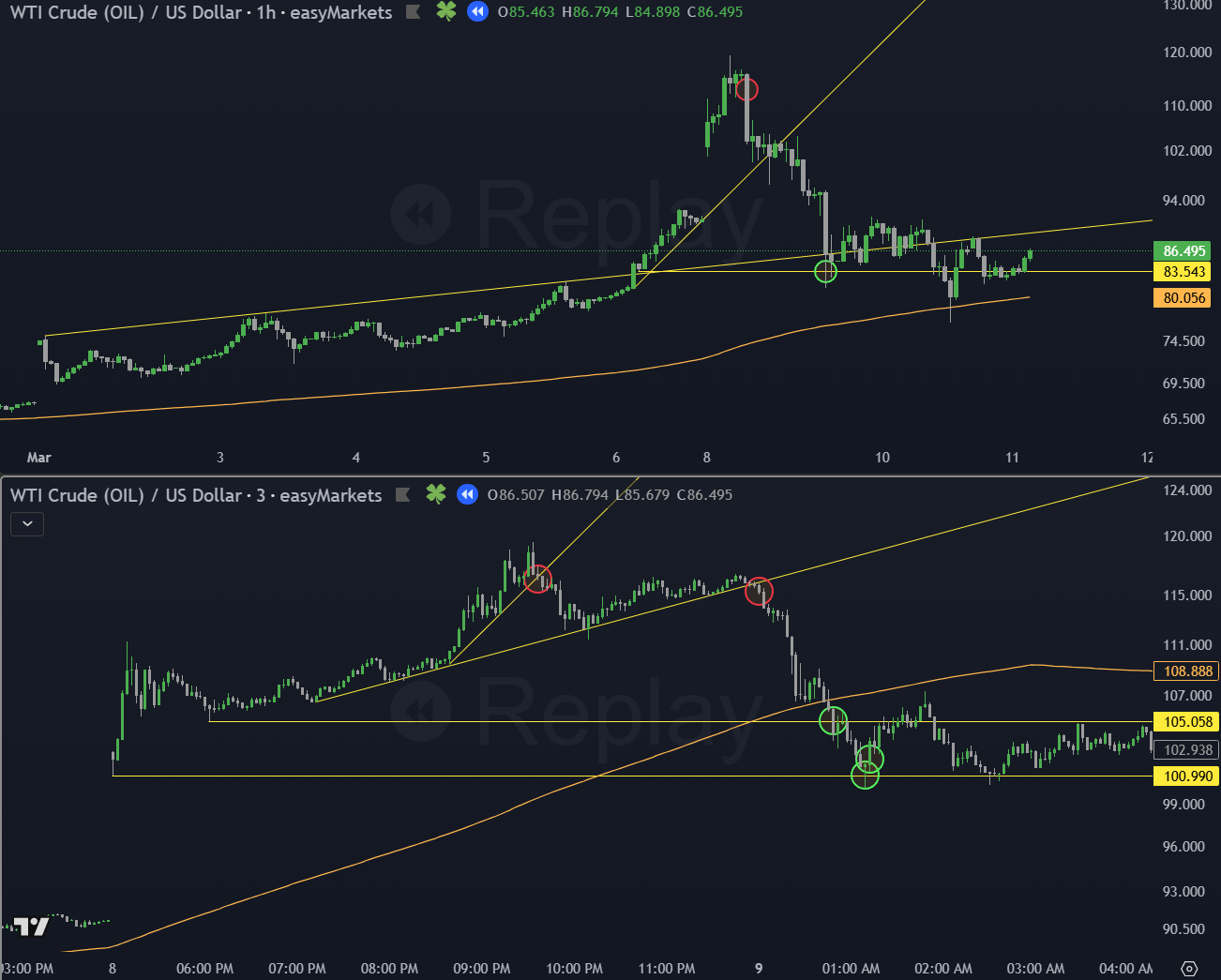
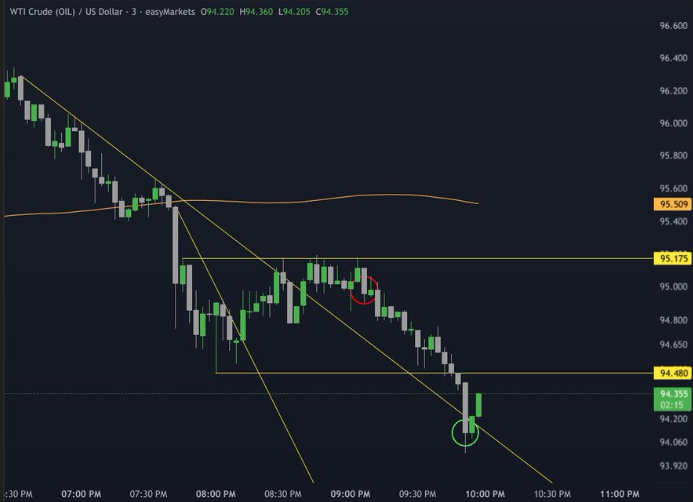
Oil / CL Futures
1) Blow-off Top (Strong Trend Accelerates) RBO 2RBO Reversal to
Trend RT 25% 50% 75% or 2-4 Pushes
2) Horiz/Diag TL BO Close or PB RBO 2RBO or 2PB RBO New Trend
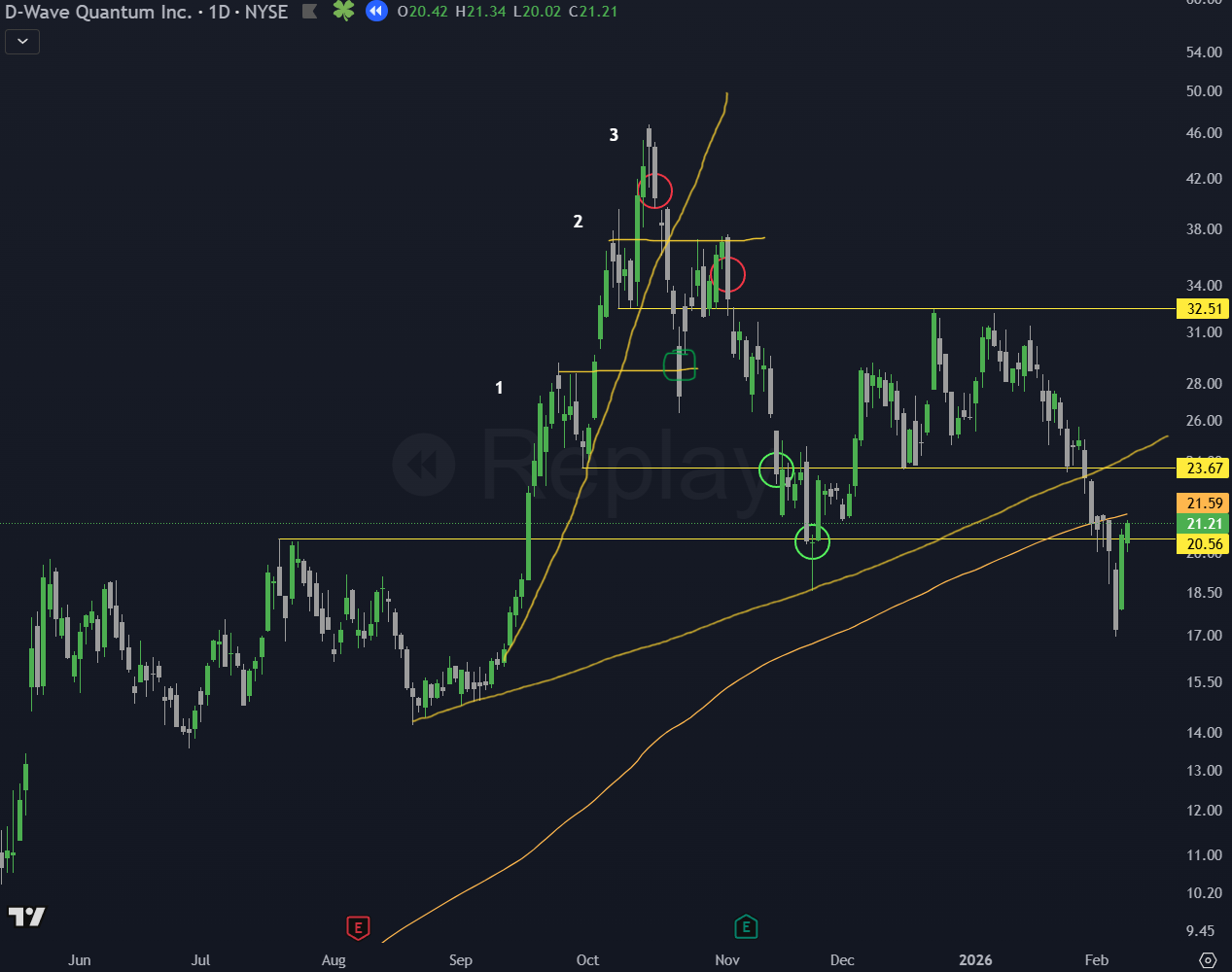
QBTS
1) 3rd 4th Push RBO 2RBO Trend Reversal to Trend RT 25% 50% 75% or
2-4 Pushes
2) Horiz/Diag TL BO then PB to BOPB HNS DB DT then New Trend
Resumption
3) Trend RT 25% 50% 75% or 3-4 Pushes to DB DT BOPB HNS RBO or RT
swing high low BO then Weaker Trend Resumption
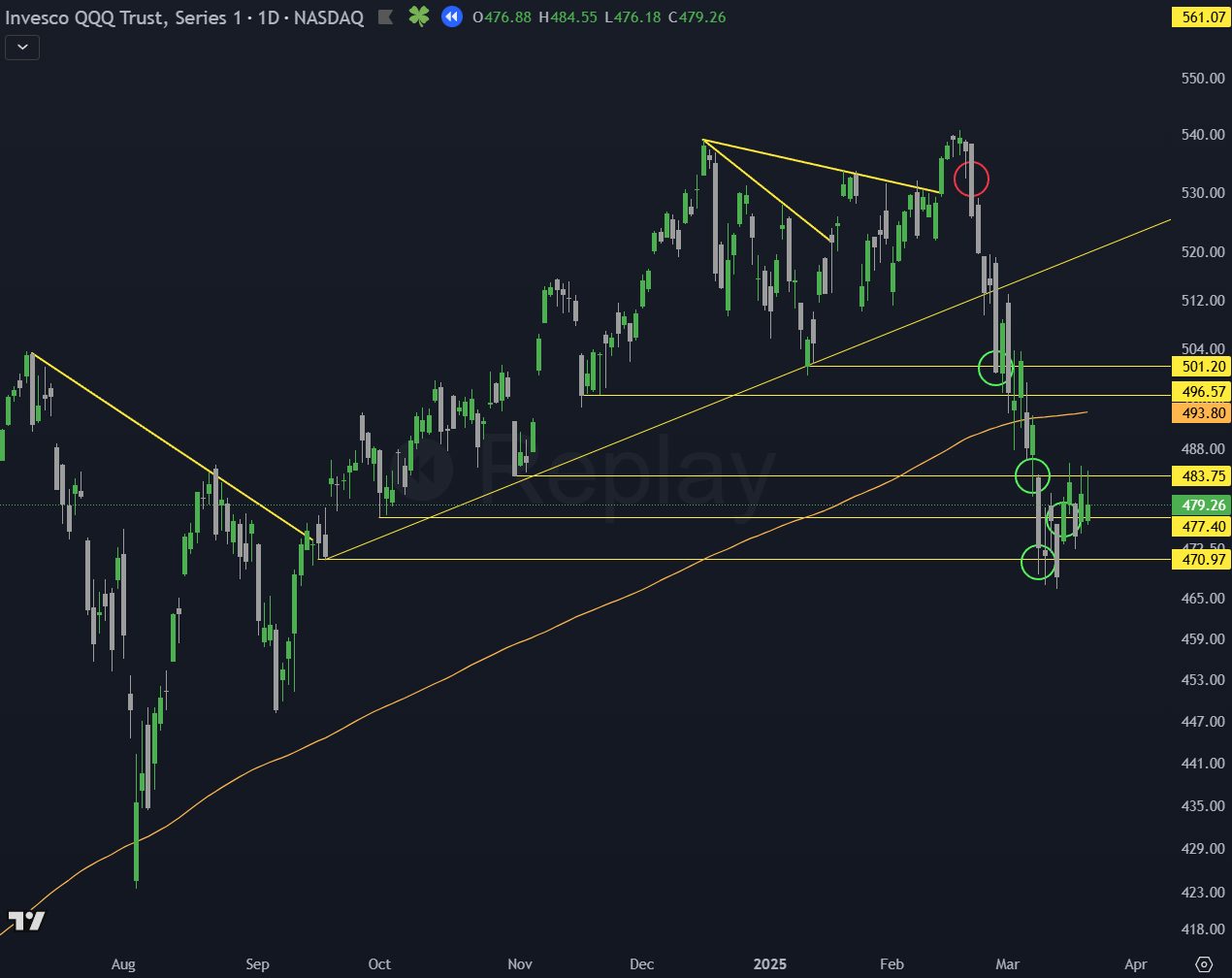
QQQ
1) Great Pattern and Entry Fails Stop Out or wait for BO PB RBO
2RBO, Trapped Traders
2) Trend RT 25% 50% 75% or 3-4 Pushes to DB DT BOPB HNS RBO or RT
swing high low BO then Weaker Trend Resumption
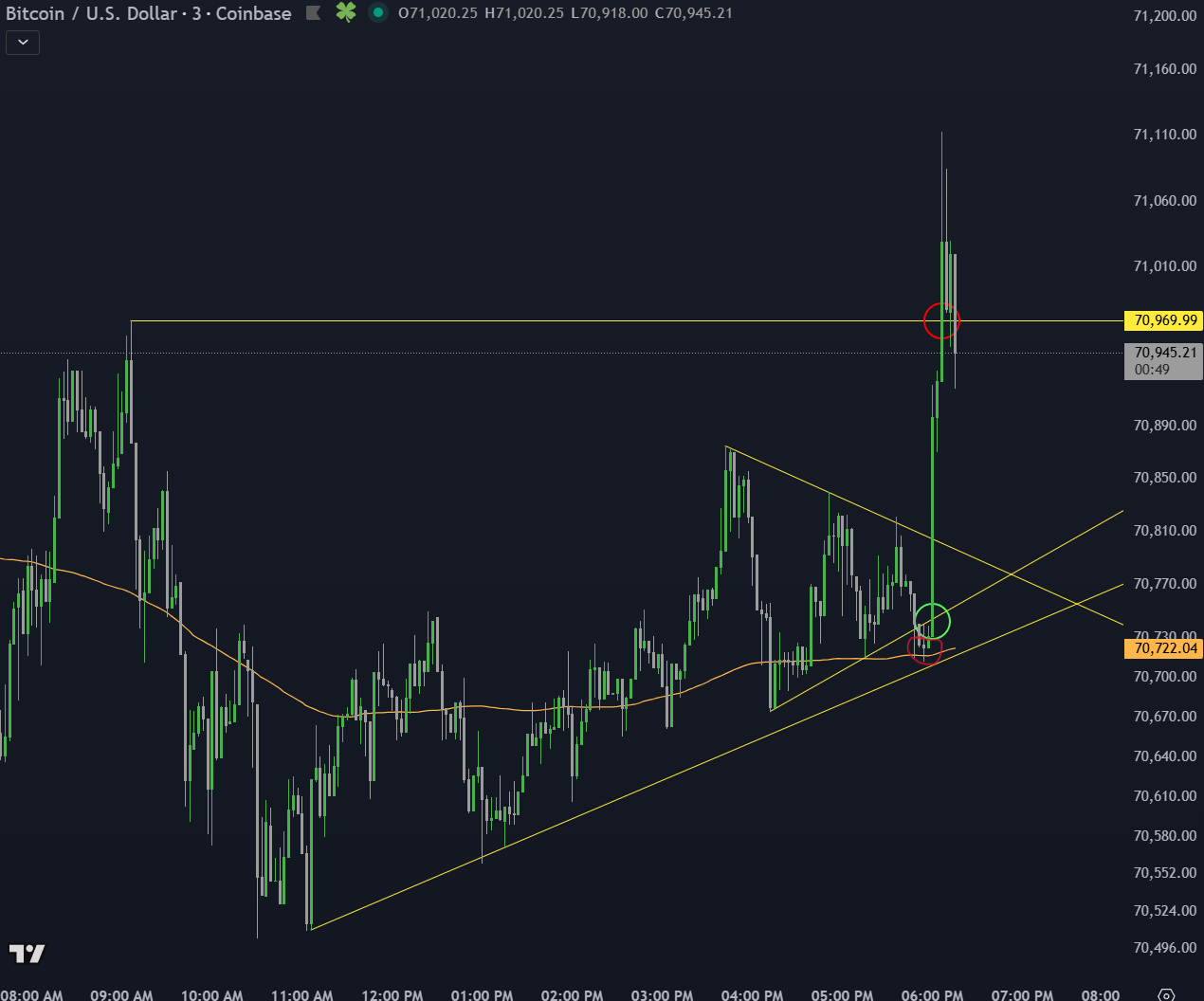
Bitcoin / BTC
1) Great Pattern and Entry Fails Stop Out or wait for BO PB RBO
2RBO, Trapped Traders
Oil / CL Futures
1) Trend RT 25% 50% 75% or 3-4 Pushes to DB DT BOPB HNS RBO or RT
swing high low BO then Weaker Trend Resumption
2) Great Pattern and Entry Fails Stop Out or wait for BO PB RBO
2RBO, Trapped Traders
Disclaimer
Most traders fail. Most traders lose all or most of their money
trading. This site is not financial advice. Nothing on this site is
a recommendation to buy or sell any security. This is my degenerate
trading strategy.
Read at your own peril.
Now that's a great way to cover my ass in regards to active
trading/day trading, but it really leaves behind people who want to
invest in the markets over the long term, which is the vast majority
of people. So I will offer my views on investing in general, not
active trading, so you can also benefit from the amazing compounding
wealth that the markets can provide.
After hundreds of years of investing data now available, I've
concluded that the key to building wealth in the markets is to
dollar cost average an index fund, and stay invested for the long
term to let compound interest work its magic. I'm not alone in
concluding that, and in fact, the greatest investors of all time
have concluded the same, such as Warren Buffett, Charlie Munger,
John "Jack" C. Bogle, and countless others.
The data is clear. Numerous studies, competitions, and real-world
examples support this approach. It's how I approach ~90% of my
investments. ~10% of my money is used to actively trade like a
degenerate, while ~90% of my money is devoted to dollar cost
averaging index funds in my retirement accounts (401k, IRAs, etc.).
For IRAs, I prefer ETFs such as SPY or QQQ (or lower-cost
alternatives with the same fund makeup). For 401k's, I prefer
mutual funds with similar fund makeup to those ETFs (only because
ETFs are usually not available in 401k's). And I don't actively
trade these long-term accounts.
I set it and forget it.
And that's the key to gaining true wealth. Dollar cost averaging an
index fund, staying invested for the long term, and letting compound
interest work its magic. If you try to time the market at any point
in your lifetime, you will likely fail, and lose far more money than
you thought possible. Therefore, in my opinion, all other options
outside of dollar cost averaging an index fund are flawed and will
likely cause you far more harm and losses that rob you of the
wealthy future you desired.
But find what works for you. Speak to a registered investment
advisor. Tell him or her exactly what you read here, and then
collaborate together to find what works best for you.